| Product | Pioneer RT-909 Black Edition |
| Type | Reel-to-Reel Tape Machine |
| Category | Reel to Reel |
| Key Technologies | Restoration work including black fascia refinishing, head block replacement, tape head servicing, mechanical servicing and additional damping upgrades as described in the review. |
| Recommended For | Collectors and enthusiasts interested in vintage reel-to-reel equipment and restored Pioneer RT-909 machines. |
| Verdict | The RT-909 is a consumer reel-to-reel deck that offers a pleasing sound, distinctive styling and extensive restoration potential. |
| Tannoyista Rating | 3.5 / 5 |
Josie Willow-Hecate Lewis — 15th May 2012.

Discover the rare black edition of the Pioneer RT-909 Reel-to-Reel Tape Machine
T he original black version of the RT-909 was produced in limited numbers for the U.S. military, making it one of the rarest iterations of this iconic tape machine. Vlad Frincu dubbed it the "Swiss version" — a reference to its precision and completeness. This is the RT-909 at its peak: fully updated, fully loaded, and fully revered.
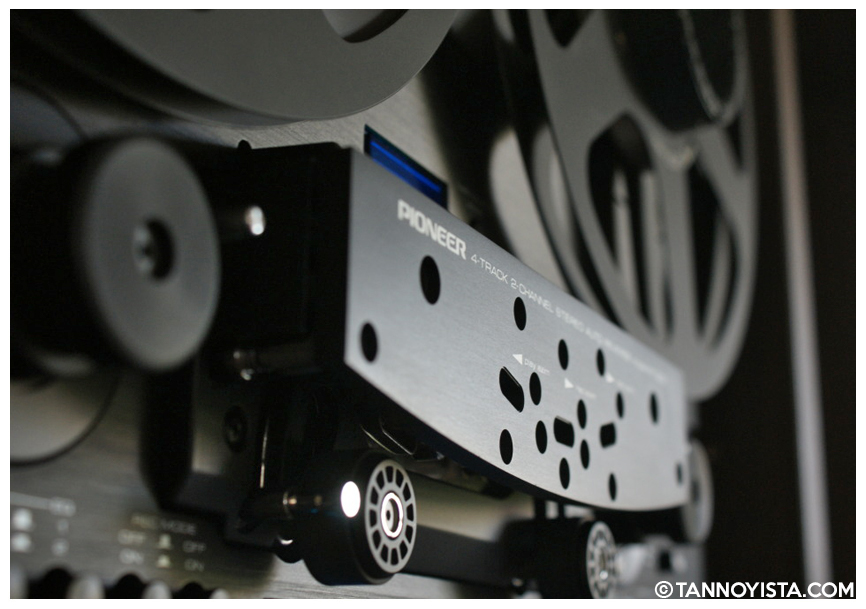
All black fascia parts were finished at the Burmester factory to which you can only imagine and expect to be absolutely perfect. Everything from the knobs, tension arms to the reel tables, and the reels themselves.

The production of getting the finish as perfect as possible was an enormous and very expensive task because the original panels simply could not be anodised due to the poor quality of the original base metal.
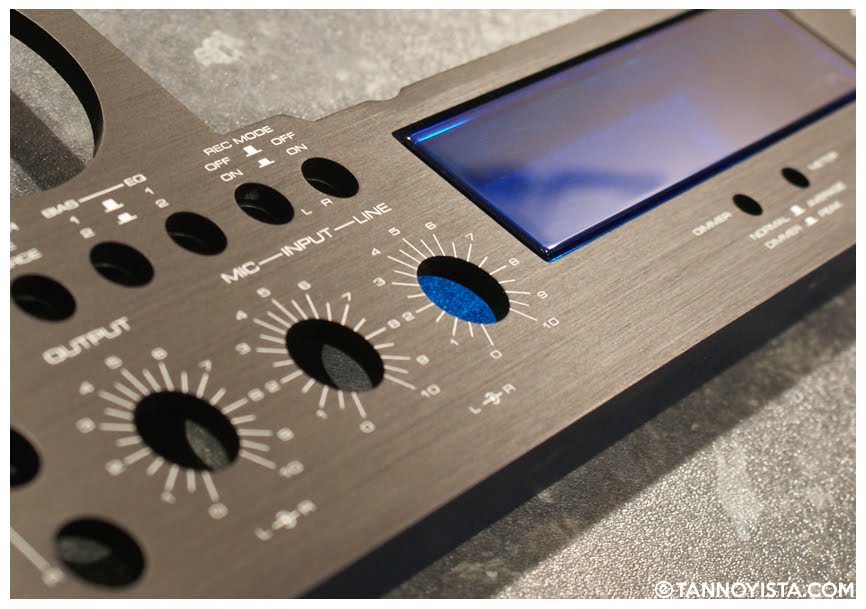
So a different technique was needed. Then of course came the re-production of the lettering. The technique of getting the lettering on the panels is one I've never come across before. You would think that it would be a post effect or over-print, but it's not.

If you run your finger over any of the lettering there is no raised effect. How this is done to such accuracy and pin-sharpness is quite amazing. I suppose it's an effect that Burmester would be only too familiar with.

The head-block, for example, is actually a full remake of the original because of the poor quality of the original metal. Using extremely high-tech 3D scanning equipment, it is much more accurate than the original head block as much higher quality materials were used in this production. All heads are re-lapped and laser aligned by JRF Magnetics.
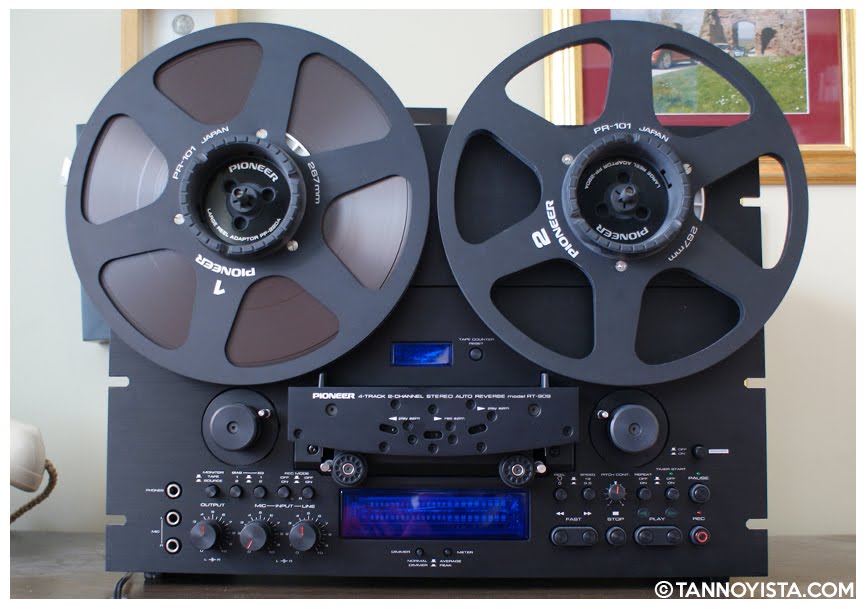
The process of getting the finish as perfect as possible and blemish-free on all of the fascia parts had been a very expensive and time-consuming project and so not many parts were produced. Therefore a very hefty price tag. Needless to say, this is for the connoisseur — someone who appreciates quality in build and sound as well as design.
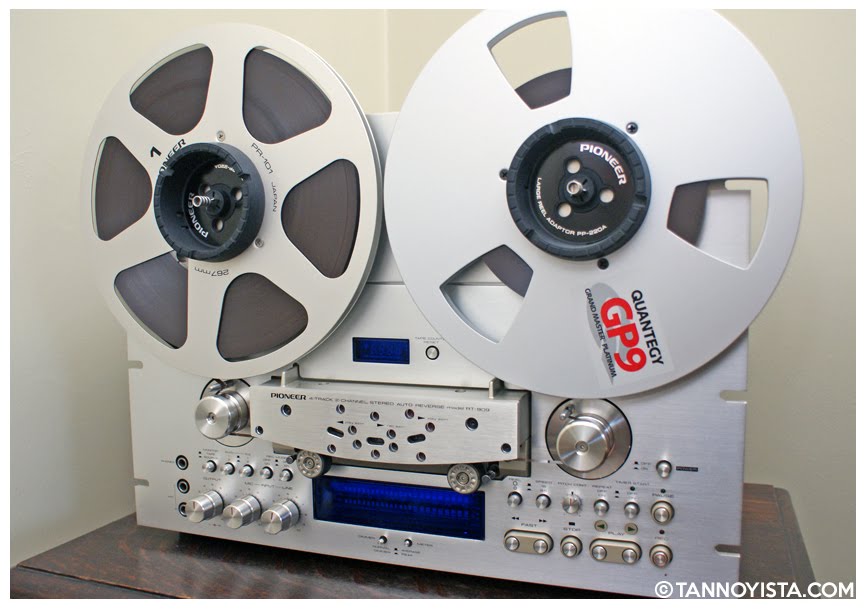
The deck is one of the last decks made and dated to 1982, and this conversion was carried out in May 2012. Here's what I started with.
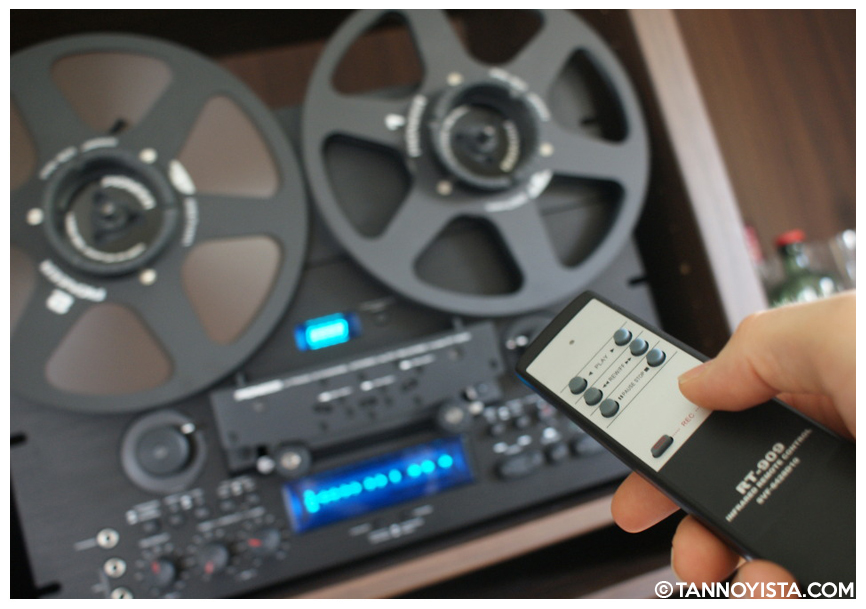
The upgrades also included a remote control which worked perfectly, and also a newly developed damper for the capstan and pinch roller assembly.


Works carried out:
| Tension Arms | Stripped down, re-made and re-lubricated in Switzerland. |
| Tape Guides | Tension arm tape guides were fully re-made by hand in Switzerland. |
| Tape Heads | The tape heads were re-lapped, re-mounted and laser aligned onto the new head block by JRF Magnetics in the U.S.A. |
| Servicing | The deck was fully serviced with mechanisms stripped down, cleaned and re-lubricated. |
| Capstan Damper | A custom-made oil damper was fitted to reduce noise from the capstan lift mechanism. |
| Brakes | Both brakes were serviced, motors were re-lubricated, brake engage springs were replaced and brake solenoid lift arms were replaced with custom-made arms fitted with coupling silencers. |
| Brake Drums | Brake drums were cleaned and fitted with anti-resonating tubes on the mainsprings, with a softener strip applied to the back of the brake band. |
| Motor Relay | The motor relay was removed and internal contacts were cleaned with IPA and De-Oxit before refitting. |
| Remote Control | A custom-made remote control designed in Switzerland by the re-inventor V. Frincu was fitted. |
| Drive System | Capstan drive wheels were professionally polished and lubricated, with a brand new drive belt fitted. |
| Pinch Rollers | Brand new pinch rollers made by Terry’s Rubber Rollers (USA) were fitted. |
| Calibration | The deck was re-biased and calibrated. |
| Casework | The outer casework was fitted with internal sound-dampening material and the vents fitted with mesh to reduce dust accumulation inside the deck. |
To finish:
The RT-909 is a lovely bit of kit. Its sound has a great signature and will adorn any vintage or modern system. The mechanics are sound and reliable as well as the electronics, once a re-cap has been performed.
The quality of the metalwork is good for a home unit but it's not great. Pressed plate metal sections make up the main internal face motor plate which is okay, but when you compare it to say, a semi-pro Revox or a pro-Studer deck, you see where things could have been maybe a little better.
On a Revox, Studer, Otari or Tascam for example, the faceplate is a cast chunk of alloy.
The RT-909 is a consumer deck and it does sound very nice. Its aesthetics are the most important for most and therefore, in the grand scheme of things it's a nice sounding and comfortable deck to own.
With the updates from Vlad, this deck is now like using a very high-end cassette player, like a Nakamichi or similar. For the user, it's simply superb and an amazing piece of vintage technology.
When reconditioned to mint condition mechanically and aesthetically, the RT-909 becomes timeless in design and, yes, a work of art in its own way. It was a pleasure to be instructed by Vlad on the upgrades.
Lastly, if you are in possession of an RT-909, this is exactly what you should do with it... so long as you like black of course.
Frequently Asked Questions
Is the Pioneer RT-909 Black Edition rare?
Yes — an original black edition RT-909 is exceptionally rare. Originally produced in limited numbers for military use, these versions are highly sought after by collectors and reel-to-reel enthusiasts worldwide. This is a reproduction but of much higher quality than an original military deck.
What makes this Pioneer RT-909 different from a standard model?
This particular machine received extensive cosmetic and mechanical upgrades including custom black fascia refinishing, rebuilt tension arms, re-lapped and laser-aligned heads, upgraded damping systems and remote-control functionality.
Does the RT-909 sound as good as professional studio tape machines?
The RT-909 sounds excellent for a consumer reel-to-reel deck, offering a warm and engaging presentation. However, compared to professional machines such as Studer, Revox or Otari decks, it's not comparable in many, if not all respects. Pro decks are built to a professional standard, not consumer standard.
Why were the tape heads re-lapped and laser aligned?
Re-lapping restores the surface of worn tape heads while laser alignment ensures extremely accurate tape tracking and playback performance. These upgrades help maximise fidelity, channel balance and long-term reliability.
Is restoring a Pioneer RT-909 worthwhile today?
Absolutely. When properly restored and serviced, the RT-909 becomes a stunning centrepiece for any vintage hi-fi system. Its combination of iconic styling, satisfying mechanics and sound makes it one of the most enjoyable reel-to-reel machines to own in a home setup.
About the Author
Josie Willow-Hecate Lewis — audiophile equipment reviewer with more than 30 years of experience covering analogue turntables, valve amplification, loudspeakers, studio monitoring systems and high-end hi-fi design.
Explore More Reel to Reel Reviews
Discover more detailed PRODUCT CATEGORY reviews, comparisons and listening impressions from the Tannoyista archive.


 All the photographs and images on this site are copyright.
0 comments